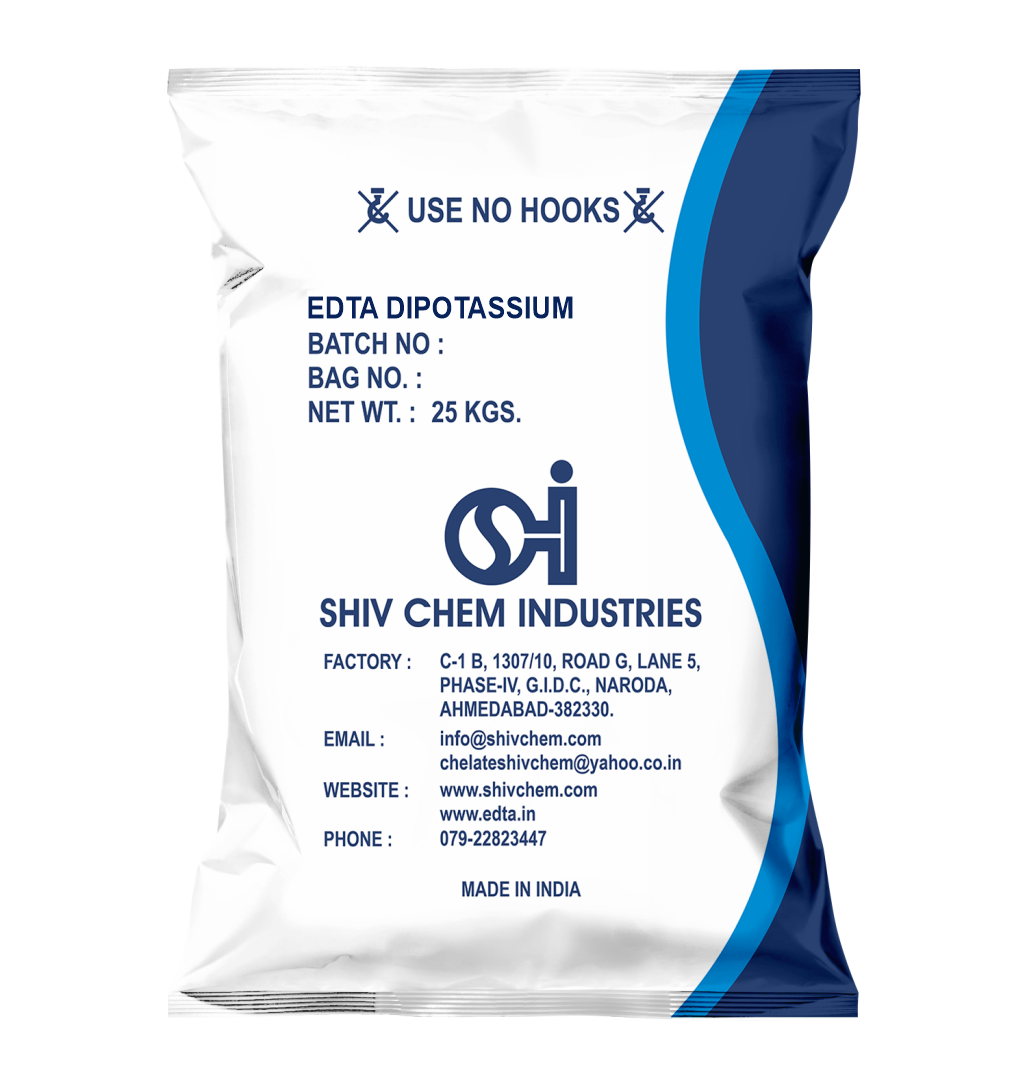
Dipotassium EDTA salt
Dipotassium EDTA salt, a water-soluble compound derived from ethylenediaminetetraacetic acid (EDTA), is a highly effective chelating agent. It plays a crucial role in various industrial, cosmetic, pharmaceutical, and agricultural applications by binding to metal ions, preventing them from interfering with processes or degrading product quality. Understanding its properties and applications is key for businesses seeking effective solutions for metal ion control.
What is Dipotassium EDTA Salt?
Dipotassium EDTA salt is the dipotassium salt of EDTA. EDTA is a powerful aminopolycarboxylic acid known for its ability to form stable, water-soluble complexes with a wide range of metal ions, including calcium, magnesium, iron, and copper. The dipotassium form offers good solubility and stability, making it a preferred choice in many formulations where a less alkaline pH is desired compared to tetrapotassium EDTA.
The chelating action of dipotassium EDTA salt is its primary functional characteristic. It works by surrounding a metal ion, effectively deactivating its reactivity. This property is invaluable in preventing undesirable reactions such as oxidation, precipitation, or catalytic degradation that metal ions can cause. Its effectiveness spans across various pH ranges, though optimal chelation often occurs under specific conditions depending on the metal ion involved.
Applications of Dipotassium EDTA Salt
The chelating power of dipotassium EDTA salt makes it indispensable in numerous sectors:
Water Treatment
In water treatment, dipotassium EDTA salt helps to sequester metal ions like calcium and magnesium, preventing scale formation in pipes and equipment. It also aids in removing heavy metal contaminants.
Cosmetics & Personal Care
Used to stabilize formulations by preventing metal-catalyzed degradation of active ingredients and fragrances. It improves product shelf life and clarity in soaps, lotions, shampoos, and other personal care items.
Pharmaceuticals
Acts as an excipient in pharmaceutical preparations, stabilizing drug formulations, enhancing solubility, and preventing degradation caused by trace metal ions. It's also used in certain topical treatments and medical solutions.
Agriculture
Essential for micronutrient delivery in fertilizers. Dipotassium EDTA salt keeps essential metal ions (like iron, manganese, zinc) soluble and available for plant uptake in various soil conditions.
Industrial Cleaning & Metal Treatment
Used in industrial cleaning agents to remove metal oxides and scale. It's also applied in metal surface treatment and electroplating baths to control metal ion concentrations.
Textile & Pulp/Paper
Helps to prevent metal ion interference in dyeing processes, ensuring consistent color. In pulp and paper manufacturing, it prevents metal-catalyzed degradation of pulp and improves bleaching efficiency.
Key Benefits of Using Dipotassium EDTA Salt
The adoption of dipotassium EDTA salt offers significant advantages across applications:
- Enhanced Product Stability: Prevents metal-catalyzed oxidation and degradation, extending shelf life.
- Improved Efficacy: Ensures that active ingredients and micronutrients remain bioavailable and effective.
- Scale Prevention: Reduces the formation of mineral scale in industrial systems and water lines.
- Formulation Flexibility: Provides good solubility and can be used in formulations requiring a less alkaline environment.
- Color and Clarity Improvement: Prevents discoloration and maintains the aesthetic appeal of products.
- Process Efficiency: Optimizes chemical processes by controlling unwanted metal ion interactions.
Buyer Insight
When sourcing dipotassium EDTA salt, consider the grade and purity required for your specific application. Food, pharmaceutical, and cosmetic grades often have stricter regulatory requirements than industrial grades. Understanding the typical metal ions you need to chelate will also help in selecting the most effective chelating agent and concentration.
Choosing the Right Dipotassium EDTA Salt Supplier
Selecting a reliable supplier for dipotassium EDTA salt is crucial for ensuring product quality, consistent supply, and regulatory compliance. Consider the following factors:
Product Quality and Consistency
- Purity Levels: Does the supplier provide clear specifications for purity and impurity profiles?
- Grade Availability: Can they supply the required grade (e.g., technical, food, pharmaceutical)?
- Batch-to-Batch Consistency: How do they ensure consistent quality across different production batches?
Supply Chain and Reliability
- Production Capacity: Can they meet your volume requirements consistently?
- Logistics and Delivery: Do they have a robust logistics network to ensure timely delivery?
- Inventory Management: Do they maintain adequate stock to buffer against demand fluctuations?
Technical Support and Service
- Expertise: Does the supplier have technical experts who can advise on product selection and application?
- Customer Service: Are they responsive to inquiries and issues?
- Documentation: Do they provide necessary documentation, such as Certificates of Analysis (CoA) and Material Safety Data Sheets (MSDS)?
Regulatory Compliance
- Certifications: Are they compliant with relevant industry standards and certifications (e.g., ISO, GMP if applicable)?
- Safety Data: Do they provide comprehensive safety and handling information?
SHIV CHEM INDUSTRIES: Your Partner for Dipotassium EDTA Salt
SHIV CHEM INDUSTRIES is committed to providing high-quality chemical solutions to meet diverse industrial needs. While focusing on core product offerings, we understand the critical role that effective chelating agents like dipotassium EDTA salt play in enhancing product performance and process efficiency. We ensure that our products adhere to stringent quality control measures, delivering reliability and consistency to our valued clients. Our commitment extends to providing excellent customer support and timely delivery, making us a dependable source for your chemical requirements.
Frequently Asked Questions
What is the primary function of dipotassium EDTA salt?
The primary function of dipotassium EDTA salt is to act as a chelating agent. It binds to metal ions, preventing them from causing undesirable reactions such as precipitation, oxidation, or degradation in various formulations and processes.
How does dipotassium EDTA salt differ from other EDTA salts?
Dipotassium EDTA salt is one of several salts of EDTA. Compared to tetrasodium EDTA, it is less alkaline. Compared to diammonium EDTA, it provides potassium ions rather than ammonium ions. The choice often depends on the desired pH of the formulation and specific application requirements.
Is dipotassium EDTA salt safe for cosmetic and food applications?
When used in appropriate grades (food grade or cosmetic grade) and concentrations as permitted by regulatory bodies, dipotassium EDTA salt is considered safe for use in cosmetics and certain food applications. Always refer to specific product specifications and regulatory guidelines.
How should dipotassium EDTA salt be stored?
Dipotassium EDTA salt should be stored in a cool, dry place, away from incompatible materials. Keep containers tightly closed to prevent moisture absorption, as it is a water-soluble compound.
Ready to Optimize Your Processes?
Discover how SHIV CHEM INDUSTRIES can supply the high-quality dipotassium EDTA salt you need. Contact us today to discuss your specific requirements and receive a tailored solution.
Request a Quote