
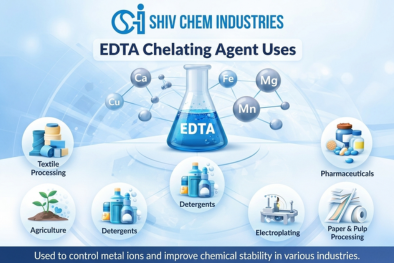
EDTA Chelating Agent Uses
EDTA Chelating Agent Uses
Chelating agents play an important role in modern industrial chemistry by controlling metal ions that can interfere with chemical reactions and manufacturing processes. Among the most widely used chelating compounds is EDTA, commonly known as ethylenediamine tetraacetic acid or edetic acid. EDTA is a synthetic amino acid compound designed to bind metal ions and stabilize chemical systems.
EDTA chelating agent uses extend across numerous industries including textiles, detergents, pharmaceuticals, agriculture, paper manufacturing, electroplating, cosmetics, and polymer processing. Its ability to capture and neutralize metal ions such as calcium, magnesium, iron, and copper makes it an essential chemical in many industrial formulations and processing environments.
When metal ions remain uncontrolled in industrial systems, they can cause precipitation, discoloration, product instability, and process inefficiencies. EDTA helps prevent these issues by forming stable complexes with metal ions, allowing processes to remain consistent and predictable.
As industries demand higher-quality materials and more controlled manufacturing environments, EDTA continues to be one of the most reliable chelating agents used worldwide in chemical processing and industrial formulations.
Understanding EDTA as a Chelating Agent
EDTA, or ethylenediamine tetraacetic acid, is classified as a hexadentate ligand, meaning it can form six coordination bonds with metal ions. This structure allows EDTA molecules to effectively surround and bind metal ions, forming stable complexes that prevent these metals from reacting with other compounds in a system.
In many industrial processes, trace metals present in water or raw materials can interfere with chemical reactions. These metals may reduce product quality, affect chemical stability, or trigger unwanted side reactions. EDTA works by isolating these metal ions, preventing them from interacting with other chemicals.
Because of this property, EDTA is widely used in applications that require controlled chemical reactions, high product purity, and consistent manufacturing conditions. Its strong chelation capability makes it suitable for industries that depend on stable chemical environments.
Industrial Importance of EDTA Chelating Agents
Modern manufacturing processes require precise chemical control. Metal contamination from raw materials, water sources, or processing equipment can lead to production inefficiencies and quality problems. EDTA chelating agents help address this issue by binding metal ions and stabilizing chemical formulations.
In many industrial formulations, EDTA helps improve product shelf life, prevent oxidation, enhance cleaning performance, and maintain chemical balance. Its effectiveness across a wide pH range and compatibility with various formulations make it a preferred chelating agent in several sectors.
Industries that rely heavily on chemical processing often incorporate EDTA into their formulations to improve product performance and reduce operational challenges caused by metal contamination.
EDTA Chelating Agent Uses in Textile Processing
Textile manufacturing involves several chemical processes such as bleaching, dyeing, scouring, and finishing. These processes require carefully controlled chemical conditions to achieve consistent fabric color and quality.
Metal ions present in the water used during textile processing can interfere with dyes and bleaching agents. This may lead to uneven dyeing, reduced brightness, or inconsistent fabric finishing.
EDTA chelating agents help control these metal ions during textile processing. By binding calcium, magnesium, and iron ions, EDTA allows bleaching and dyeing chemicals to function more effectively. This results in improved fabric coloration, better dye uptake, and greater process efficiency.
In textile mills, EDTA is commonly used during kier boiling, scouring, bleaching operations, and dye bath preparation to maintain stable processing conditions.
Role of EDTA in Soap and Detergent Formulations
Soap and detergent manufacturers often face challenges caused by hard water. Hard water contains calcium and magnesium ions that reduce the effectiveness of cleaning agents and lead to soap scum formation.
EDTA is added to detergent formulations to bind these hardness ions. By capturing calcium and magnesium, EDTA prevents them from interfering with surfactants and cleaning compounds.
The inclusion of EDTA in detergents helps improve cleaning efficiency, enhance foam performance, and prevent the formation of insoluble deposits on fabrics and washing equipment.
Because of its ability to chemically soften water, EDTA has become a standard additive in many cleaning products used in both industrial and household applications.
EDTA Uses in Pharmaceutical and Medical Applications
In pharmaceutical manufacturing, EDTA is used to stabilize chemical formulations and protect active ingredients from degradation caused by metal ions. Metal contamination can accelerate oxidation reactions that reduce the stability and effectiveness of pharmaceutical compounds.
EDTA functions as an antioxidant synergist in certain pharmaceutical formulations. By binding trace metals, it helps protect active ingredients from oxidation and chemical breakdown. It may also be used as an antibacterial synergist in specific applications, where it enhances the performance of antimicrobial compounds. Additionally, EDTA is used in certain medical formulations as an anticoagulant or stabilizing agent in laboratory processes.
The chemical stability provided by EDTA helps maintain the quality and shelf life of pharmaceutical products.
EDTA Applications in Paper and Pulp Manufacturing
Paper production involves complex chemical processes including pulping, bleaching, and paper finishing. During these stages, metal ions present in pulp or process water can interfere with bleaching chemicals and reduce the brightness of finished paper.
EDTA chelating agents help remove or neutralize these metal ions before bleaching processes begin. This allows bleaching chemicals to perform more effectively, resulting in improved pulp brightness and more consistent paper quality.
In pulp processing, EDTA is often used to prevent unwanted reactions between metal ions and hydrogen peroxide or other bleaching agents. This helps increase bleaching efficiency and reduce chemical consumption.
Use of EDTA in Electroplating and Metal Treatment
Electroplating processes require carefully controlled chemical environments to ensure uniform metal coating on components. The presence of unwanted metal ions in plating baths can disrupt plating reactions and lead to poor surface finishes.
EDTA chelating agents help maintain stable plating bath conditions by binding metal impurities. This ensures that plating metals deposit evenly on surfaces during electroplating operations.
In metal treatment processes, EDTA may also be used in cleaning formulations to remove metal deposits or control metal contamination during chemical processing.
By stabilizing plating baths and chemical solutions, EDTA contributes to improved coating quality and more reliable metal finishing operations.
EDTA Uses in Agriculture and Fertilizer Formulations
In agriculture, micronutrients such as iron, zinc, copper, and manganese are essential for plant growth. However, these nutrients can become unavailable to plants when they react with soil minerals.
Chelated micronutrient fertilizers use EDTA to bind these metal nutrients and keep them soluble in soil solutions. This allows plants to absorb nutrients more effectively through their root systems. EDTA chelation improves nutrient availability and prevents micronutrients from becoming chemically locked in soil. As a result, EDTA-based fertilizers help support healthier plant development and improved crop productivity.
These chelated fertilizers are commonly used in horticulture, greenhouse cultivation, and intensive agricultural systems where nutrient management is critical.
EDTA Uses in Cosmetic and Personal Care Products
Cosmetic and personal care formulations require stable chemical conditions to maintain product quality during storage and use. Trace metals present in water or raw materials can cause discoloration, oxidation, or instability in cosmetic products.
EDTA is used in many personal care products such as shampoos, lotions, creams, and soaps as a stabilizing agent. It binds metal ions that could otherwise degrade product ingredients or alter product appearance.
By maintaining chemical stability, EDTA helps extend the shelf life of cosmetic formulations and ensures consistent product performance.
EDTA Applications in Polymer and Chemical Manufacturing
Polymer production and chemical synthesis processes require controlled reaction conditions to ensure product consistency. Trace metal ions can catalyze unwanted reactions that affect polymer properties or chemical purity. EDTA chelating agents help control these reactions by removing metal catalysts that may interfere with production processes. This allows chemical reactions to proceed more predictably and improves product quality.
In pigment manufacturing, polymerization processes, and specialty chemical production, EDTA is often incorporated into formulations to maintain process stability and product reliability.
Common Industrial Applications of EDTA Chelating Agents
- Textile bleaching and dyeing processes
- Soap and detergent manufacturing
- Pharmaceutical and laboratory formulations
- Paper and pulp processing
- Electroplating and metal treatment
- Agricultural micronutrient fertilizers
- Cosmetic and personal care products
- Rubber and polymer manufacturing
- Pigment and chemical synthesis processes
These diverse applications highlight the versatility of EDTA as a metal-control agent used across multiple industrial sectors.
Handling and Storage Considerations for EDTA Acid
Industrial chemicals such as EDTA acid require proper handling and storage to ensure safety and maintain product quality. EDTA solutions may cause irritation to the skin and eyes, so protective equipment is recommended during handling.
Safety measures typically include protective gloves, goggles, and appropriate safety footwear. Adequate ventilation should also be maintained in areas where chemical powders or solutions are handled.
For storage, EDTA acid should be kept in cool, dry environments away from moisture and direct heat sources. Containers made from polyethylene, polypropylene, or high-density polyethylene are commonly used to store the material.
Proper storage and handling practices help preserve chemical stability and ensure safe use in industrial environments.
Conclusion
EDTA chelating agent uses extend across a wide range of industrial sectors where metal ion control is essential for maintaining stable chemical reactions and consistent product quality. From textile processing and detergent manufacturing to pharmaceuticals, agriculture, and electroplating, EDTA plays a crucial role in improving industrial efficiency and chemical stability.
Its strong metal-binding capability allows manufacturers to manage metal contamination, enhance formulation performance, and maintain controlled processing conditions. As industries continue to demand reliable chemical control solutions, EDTA remains one of the most versatile and widely used chelating agents in modern industrial chemistry.
Frequently Asked Questions
Common questions about EDTA chelating agents and their industrial uses
EDTA functions by binding metal ions such as calcium, magnesium, iron, and copper. By forming stable complexes with these metals, it prevents them from interfering with chemical reactions, industrial formulations, or manufacturing processes.
EDTA is widely used because it helps control metal contamination that can disrupt chemical reactions. Its strong chelating ability supports process stability, improves product quality, and enhances the effectiveness of chemical formulations.
EDTA binds hardness ions such as calcium and magnesium present in water. By neutralizing these ions, it prevents them from reacting with detergents, allowing cleaning agents to function more effectively and improve washing performance.
EDTA is used in agriculture to chelate micronutrients such as iron, zinc, and copper. Chelation keeps these nutrients soluble and available for plant absorption, improving nutrient efficiency in soil and fertilizer formulations.
Yes, EDTA is used in cosmetics to stabilize formulations. It prevents metal ions from causing oxidation, discoloration, or ingredient degradation, helping maintain product quality and shelf life.
Industries such as textiles, detergents, pharmaceuticals, agriculture, paper manufacturing, electroplating, cosmetics, and chemical processing commonly use EDTA chelating agents to control metal ions and stabilize chemical systems.
Get In Touch
Shiv Chem Industries — Ahmedabad, Gujarat, India
Address C-1/B, 1307/10, Road-G, Lane-5, Phase-IV, GIDC, Naroda, Ahmedabad-382330, Gujarat, INDIA. Email Chelateshivchem@yahoo.co.ininfo@shivchem.com Phone +91 9825312613 | +91 98255 77277
079 22823447 | +91 9558877277 | +91 9574577277

Get In Touch
Ahmedabad Office :-
C-1/B, 1307/10, Road-G, Lane-5, Phase-IV, GIDC, Naroda, Ahmedabad-382330, Gujarat, INDIA.
Ahmedabad Phone :- +91 9825312613, +91 98255 77277
Ahmedabad Landline :- 079 22823447
Ahmedabad Email :- info@shivchem.com
Mumbai Office :-
B-004, Poornima Apts, 23 Pedder Road, Mumbai - 400026, Maharashtra.
Mumbai Phone :- +91 98210 38627
Mumbai Landline :- 022 23523091, 022 23520235
Mumbai Email :- hiren@tradelinkss.com
Links
PRODUCTS
SHIV CHEM INDUSTRIES