
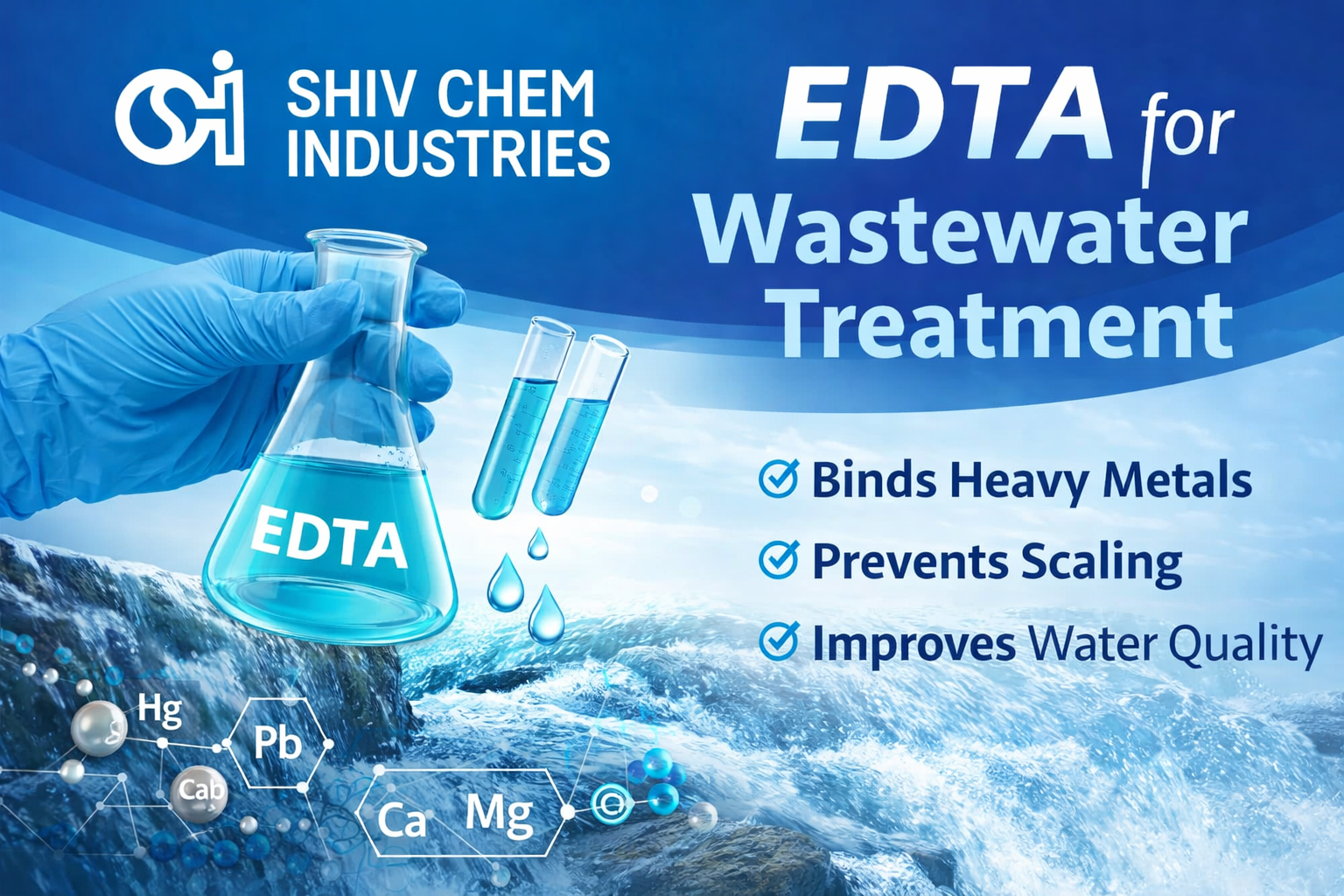
EDTA for Wastewater Treatment
EDTA for Wastewater Treatment
In industrial wastewater management, the presence of heavy metals, scale-forming ions, and complex chemical residues creates significant challenges for effective treatment. EDTA for wastewater treatment plays an important role in addressing these issues by acting as a powerful chelating agent. It binds with metal ions and stabilizes them in solution, enabling efficient separation, controlled processing, and improved water quality outcomes.
Modern industries rely on structured water treatment systems to maintain operational efficiency and meet environmental compliance standards. EDTA-based treatment approaches are widely used to manage dissolved metal content, reduce scaling, and enhance the effectiveness of downstream treatment processes.
Understanding the Role of EDTA in Wastewater Treatment
EDTA, or Ethylene Diamine Tetra Acetic Acid, is a chemical compound designed to form stable complexes with metal ions such as calcium, magnesium, iron, and other heavy metals. In wastewater systems, these ions can interfere with treatment processes or lead to scaling, corrosion, and reduced system efficiency.
By binding with these ions, EDTA minimizes unwanted chemical reactions and keeps contaminants in a controlled, manageable form. This allows treatment systems to operate more consistently and improves the overall quality of treated water.
How EDTA Works in Water Treatment Systems
The mechanism of EDTA is based on chelation, where the molecule surrounds and binds metal ions to form stable, water-soluble complexes. This process reduces the reactivity of metals and prevents them from precipitating or forming deposits within the system.
In wastewater treatment environments, EDTA helps maintain a balanced chemical condition. It supports consistent performance across filtration, sedimentation, and chemical treatment stages, ensuring that contaminants are effectively managed without disturbing system stability.
Key Benefits of Using EDTA for Wastewater Treatment
EDTA provides several operational and performance advantages in industrial water treatment systems:
- Effective binding of heavy metals such as iron, copper, and lead
- Prevention of scale formation caused by calcium and magnesium
- Improved efficiency of chemical treatment processes
- Stabilization of water chemistry for consistent system operation
- Enhanced performance of filtration and separation systems
- Reduced equipment fouling and lower maintenance requirements
Industrial Applications of EDTA in Wastewater Management
EDTA is widely used in industries where wastewater contains dissolved metals and complex chemical residues. Its ability to control metal ion behavior makes it suitable for a wide range of industrial processes.
Common application areas include:
- Electroplating and metal finishing industries
- Textile processing and dyeing units
- Paper and pulp manufacturing plants
- Pharmaceutical and chemical processing facilities
- Agriculture and agrochemical industries
- Detergent and cleaning product manufacturing
Step-by-Step Use of EDTA in Wastewater Treatment Process
The application of EDTA in wastewater treatment follows a structured approach to ensure optimal performance:
- Initial analysis of wastewater composition to determine metal content
- Controlled dosing of EDTA based on concentration levels
- Proper mixing and uniform dispersion within the treatment system
- Chelation of metal ions to form stable complexes
- Integration with filtration or separation processes
- Final treatment, followed by discharge or reuse of water
Factors to Consider When Using EDTA in Treatment Systems
The performance of EDTA depends on several operational factors that must be carefully managed. These include pH levels, temperature, concentration, and compatibility with other treatment chemicals.
Accurate dosing is essential to avoid excess chemical usage while ensuring effective chelation. Additionally, understanding the nature of contaminants present in wastewater helps optimize the treatment process and achieve consistent results.
Environmental Considerations in EDTA Usage
While EDTA is highly effective in binding metal ions, its use requires responsible handling and controlled application. Industries must ensure that treatment processes are designed to manage EDTA-metal complexes effectively and comply with environmental regulations.
Advanced treatment methods often integrate EDTA with additional processes such as precipitation or biological treatment to support safe disposal or reuse of water. This approach contributes to more sustainable water management practices.
Integration with Modern Wastewater Treatment Technologies
EDTA is commonly used alongside modern wastewater treatment technologies to improve overall system efficiency. It works in combination with filtration systems, ion exchange processes, and chemical treatment units to enhance performance.
Its ability to stabilize metal ions allows these systems to function more efficiently, reducing operational disruptions and improving treatment outcomes. This integration makes EDTA a valuable component in advanced water treatment infrastructure.
Future Relevance of EDTA in Industrial Water Treatment
As industries continue to focus on sustainability and efficient resource management, the demand for reliable water treatment solutions is steadily increasing. EDTA remains relevant due to its proven ability to manage complex wastewater compositions and support consistent treatment performance.
Ongoing advancements in chemical engineering and environmental technologies are expected to further optimize the use of chelating agents like EDTA, strengthening their role in future water treatment strategies.
Frequently Asked Questions
EDTA acts as a chelating agent that binds with metal ions in wastewater, preventing unwanted reactions and enabling efficient treatment and removal of contaminants.
EDTA forms stable complexes with heavy metals, keeping them in a controlled and soluble form that can be effectively managed through filtration or chemical treatment processes.
Yes, EDTA binds with calcium and magnesium ions, helping prevent scale formation and ensuring smooth operation of pipelines and equipment.
EDTA is widely used in industrial wastewater systems due to its ability to stabilize metal ions and improve the efficiency of treatment processes.
EDTA is introduced through controlled dosing based on water composition, ensuring proper mixing and effective chelation of metal ions.
EDTA can interact with other chemicals, so it is important to evaluate compatibility and optimize dosing to maintain balanced and effective treatment performance.

Get In Touch
C-1/B, 1307/10, Road-G, Lane-5, Phase-IV, GIDC, Naroda, Ahmedabad-382330, Gujarat, INDIA.
Chelateshivchem@yahoo.co.in
info@shivchem.com
+91 9825312613, +91 98255 77277
079 22823447, +91 9558877277, +91 9574577277
Links
PRODUCTS
SHIV CHEM INDUSTRIES