
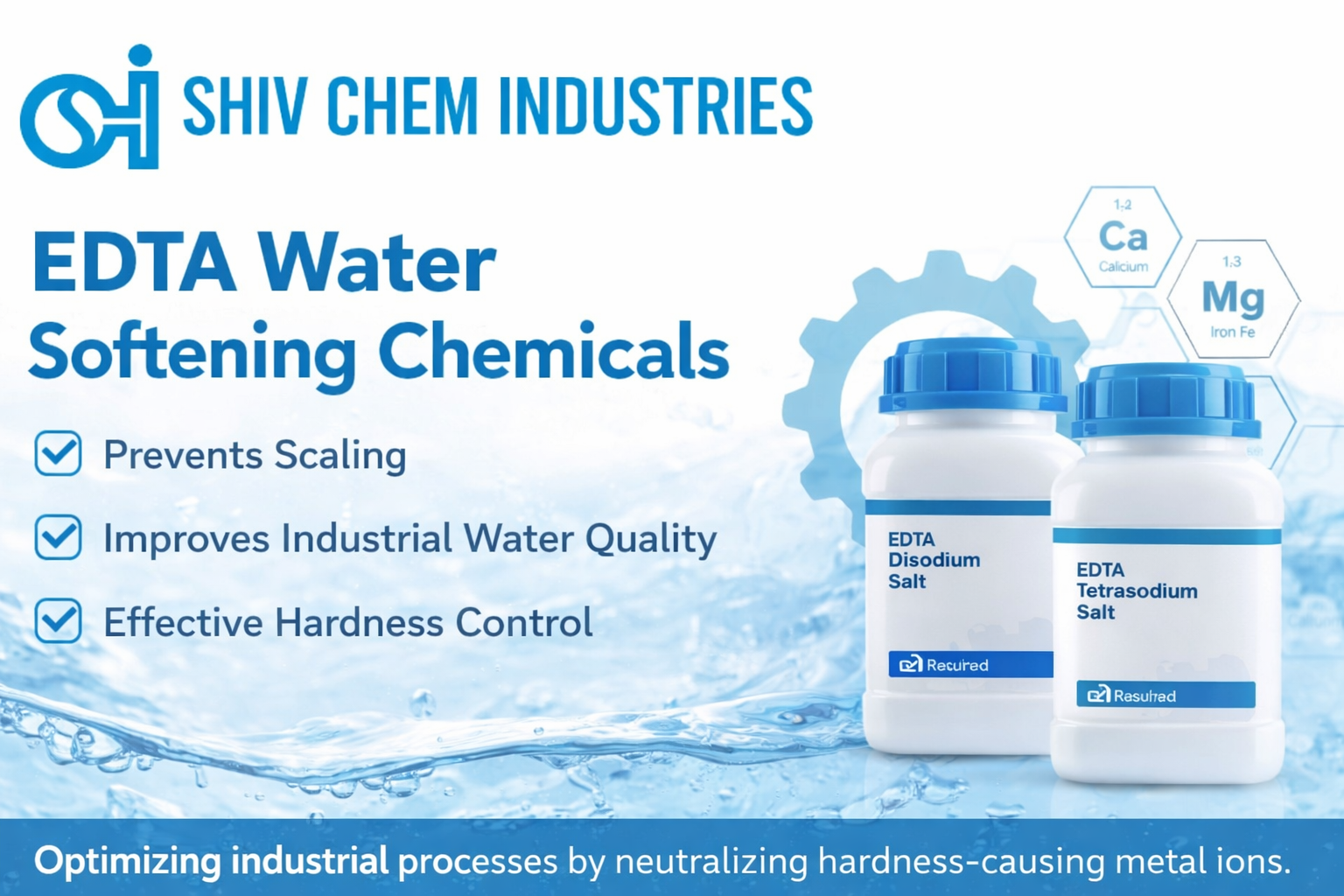
EDTA Water Softening Chemicals
EDTA Water Softening Chemicals
Water hardness is a common challenge in industrial processes, where the presence of calcium, magnesium, and other metal ions can affect system efficiency and product quality. EDTA water softening chemicals are widely used to address these issues by binding unwanted metal ions and minimizing their impact on operations. These chemicals play a vital role in maintaining process stability, reducing scaling, and improving overall performance across various industrial applications.
In industries where water is a critical component, untreated hardness can lead to equipment damage, reduced heat transfer efficiency, and increased operational costs. EDTA-based solutions provide a reliable method to maintain water quality without disrupting core process parameters.
Understanding the Role of EDTA in Water Softening
EDTA, known as Ethylene Diamine Tetra Acetic Acid, is a chelating agent designed to capture and hold metal ions present in water. Instead of allowing these ions to react and form scale deposits, EDTA creates stable complexes that remain dissolved in water. This mechanism ensures that hardness-causing elements do not accumulate on equipment surfaces.
The effectiveness of EDTA lies in its molecular structure, which enables it to form strong bonds with multiple metal ions simultaneously. This makes it highly suitable for environments where consistent water quality is essential for continuous operations.
How EDTA Water Softening Chemicals Work
The working principle of EDTA water softening chemicals is based on chelation. When introduced into hard water, EDTA molecules interact with metal ions and bind them, preventing their participation in chemical reactions that cause scaling or precipitation.
This process keeps water free-flowing and suitable for industrial use. By removing free metal ions, EDTA also enhances the performance of other chemicals used in processing systems, making it an important component in integrated water treatment solutions.
Key Characteristics of EDTA Water Softening Chemicals
EDTA-based water softening chemicals are known for their consistent performance and adaptability across different industrial conditions. They function effectively across varying pH levels and temperature ranges, ensuring reliability in diverse applications.
These chemicals are compatible with a wide range of industrial formulations, making them suitable for detergents, cleaning solutions, and water treatment systems. Their ability to prevent scale formation also contributes to extended equipment life and reduced maintenance requirements.
Applications of EDTA Water Softening Chemicals
EDTA water softening chemicals are used across multiple industries where water quality directly impacts production efficiency and product standards. Their versatility allows seamless integration into different processes.
- Industrial water treatment systems for hardness control and scale prevention
- Detergent and cleaning formulations to enhance performance
- Textile processing to maintain fabric quality during washing and dyeing
- Paper and pulp industry to reduce deposits in machinery
- Electroplating processes for metal ion stabilization
- Cosmetic and personal care formulations for improved product stability
These applications demonstrate the importance of EDTA in maintaining smooth and efficient industrial operations.
Benefits of Using EDTA Water Softening Chemicals
The use of EDTA water softening chemicals offers several operational advantages, particularly in industries that rely on consistent water quality. These benefits support improved efficiency and long-term cost management.
- Prevention of scale formation in pipelines and equipment
- Improved heat transfer efficiency in industrial systems
- Enhanced effectiveness of detergents and cleaning agents
- Reduced maintenance requirements and downtime
- Stabilization of metal ions in chemical formulations
- Consistent process performance across applications
These advantages make EDTA a preferred choice for maintaining reliable water treatment systems.
Industrial Importance of Chelating Agents in Water Treatment
Chelating agents like EDTA have become essential in modern industrial water treatment due to their ability to address multiple challenges simultaneously. Beyond softening water, they help maintain chemical balance, prevent unwanted reactions, and improve the efficiency of other additives used in processing.
In large-scale operations, even minor fluctuations in water quality can affect production outcomes. The use of EDTA helps minimize these variations, allowing industries to maintain consistent output quality.
Role of Manufacturing Expertise in Chemical Quality
The performance of EDTA water softening chemicals depends not only on their chemical properties but also on manufacturing quality. A well-established manufacturer ensures consistent composition, minimal impurities, and compliance with industrial standards.
Shiv Chem Industries, established as a partnership firm and registered under M.S.M.E. since 1987, is engaged in the production of EDTA, NTA, DTPA, and their salts along with related chemicals. The company operates from Naroda G.I.D.C. with a dedicated manufacturing facility and production capacity suited for large-scale industrial requirements.
With a team led by experienced professionals and technocrats, the company focuses on maintaining product consistency and meeting the needs of diverse industries including agrochemical, textile, pharmaceutical, and water treatment sectors.
Choosing the Right EDTA Water Softening Chemicals
Selecting the appropriate EDTA formulation is essential for achieving desired results in water softening applications. Different forms such as disodium, trisodium, and tetrasodium EDTA are used based on specific process requirements.
Factors to consider while selecting EDTA water softening chemicals include:- Type and concentration of metal ions present in water
- pH level and temperature of the process
- Compatibility with other chemicals used in the system
- Desired level of hardness control
- Application-specific requirements
Careful evaluation of these factors helps ensure optimal performance and efficiency in water treatment processes.
EDTA in Integrated Industrial Processes
In many industrial systems, EDTA is used as part of a broader formulation rather than as a standalone solution. It works in combination with surfactants, stabilizers, and other additives to enhance overall process efficiency.
Its ability to improve the performance of cleaning agents and prevent unwanted chemical interactions makes it a valuable component in complex industrial operations. This integration supports better outcomes in manufacturing, processing, and maintenance activities.
Environmental and Process Considerations
Modern industries are increasingly focused on maintaining efficiency while ensuring responsible chemical usage. EDTA water softening chemicals are designed to perform effectively at controlled dosages, helping industries optimize resource use.
Proper handling, accurate dosing, and adherence to process requirements ensure that these chemicals deliver consistent performance without unnecessary waste. This approach aligns with industrial goals of maintaining operational efficiency and process control.
Conclusion
EDTA water softening chemicals are an essential component of modern industrial water treatment systems. Their ability to control hardness, prevent scaling, and improve process efficiency makes them valuable across multiple industries. By ensuring consistent water quality and supporting stable operations, EDTA continues to play a key role in enhancing industrial performance and reliability.
Frequently Asked Questions

Get In Touch
C-1/B, 1307/10, Road-G, Lane-5, Phase-IV, GIDC, Naroda, Ahmedabad-382330, Gujarat, INDIA.
Chelateshivchem@yahoo.co.in
info@shivchem.com
+91 9825312613, +91 98255 77277
079 22823447, +91 9558877277, +91 9574577277
Links
PRODUCTS
SHIV CHEM INDUSTRIES